Women Artists excluded from History 4; Else Alfelt
Else Alfelt: Denmark’s Hidden Abstract Pioneer Rediscovered
When even well-informed art lovers struggle to name women abstract painters outside of a handful of famous figures, it’s worth asking: who else pushed the boundaries of abstraction but has largely slipped through the cracks of mainstream art history? One remarkable yet under-recognised figure is Else Alfelt (1910–1974) a Danish abstract artist whose poetic, meditative works deserve a wider audience.

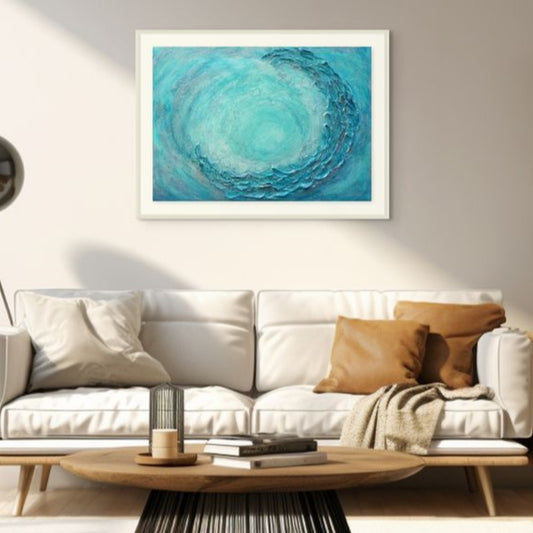
The Flower of the Universe No. 20. Else Alfelt, 1966
Life Devoted to Abstract Expression
Else Alfelt was born in Copenhagen in 1910 and remained largely self-taught as an artist throughout her career. Early attempts to exhibit her work were met with rejection; she submitted paintings to Danish annual salons as early as 1929 but did not gain acceptance until 1936. Soon after, Alfelt’s artistic voice shifted decisively toward abstraction a move that placed her at the forefront of avant-garde art communities in Denmark.
Rather than following established styles, Alfelt explored inner space, often rendering spirals, spheres and landscape motifs with rich, luminous colour. Nature profoundly influenced her work; she travelled widely, including to Lapland and Japan, seeking artistic and spiritual inspiration that would inform her abstract compositions.

Else Alfelt born September 19, 1910; Copenhagen, Denmark
Belonging and Becoming in Avant-Garde Circles
Alfelt was associated with several significant artistic groups, notably Linien (The Line) and later the CoBrA movement (an acronym for Copenhagen, Brussels, Amsterdam), a post-war avant-garde collective known for its playful and experimental approach. As one of the very few female members of CoBrA, she stood in creative dialogue with contemporaries while navigating an art world that granted far more visibility to her male peers.
Her practice also aligned with broader European modernism’s fascination with intuitive and spiritual abstraction. Though gender bias meant that her work was often overshadowed during her lifetime, Alfelt continued to exhibit and build a distinct visual language rooted in meditation and the expressive power of colour.

Meditative Abstraction and “Inner Space”
Else Alfelt’s paintings invite a contemplative engagement that distinguishes her within mid-20th-century abstraction. Repeated forms like spirals and spheres appear, not as mere shapes, but as contemplative symbols windows into what she described as “inner space.” The viewer encounters not only colour and form but an embodied experience of rhythm and emotional depth.
Her later series, such as Flowers of the Universe, composed during travels in Japan, merge spiritual insight with a refined abstract vocabulary. These works were exhibited together in retrospective shows, and the body of work now forms an essential part of understanding the emotional and symbolic possibilities of abstract painting.

Why Alfelt Was Overlooked and Why That’s Changing
Alfelt’s story delayed recognition, marginalisation beside male counterparts, and later rediscovery is a familiar one in the history of women artists. For decades, mainstream narratives of abstraction focused on a small canon of male figures, leaving many women innovators in the shadows. But the contemporary art world is actively revisiting these histories, correcting omissions and re-opening dialogues about who gets remembered and why.
Whether through exhibitions at the Carl Henning Pedersen & Else Alfelt Museum in Denmark or international retrospectives, Alfelt’s work has increasingly entered the discourse on modernism and abstraction. Critics and scholars now emphasise her unique expressive approach and the emotional resonance of her abstract language.
Alfelt’s Legacy Today
Else Alfelt’s art resonates precisely because it balances lyrical abstraction with emotional and spiritual depth. Her situation celebrated in certain modernist circles but still lesser-known in broader art history reveals how gender shaped art narratives. As the global art community re-evaluates the contributions of women artists, figures like Alfelt are gaining overdue recognition.
For collectors and art enthusiasts drawn to expressive abstraction, her works offer a rich, quietly powerful visual vocabulary that expands the canon and challenges historical biases.
Her life and work remind us that the story of abstract art is not complete without recognising the artists who laboured outside the spotlight, yet whose visual languages continue to inspire.
Sources & References
Wikipedia – Else Alfelt
Biographical information, artistic movements, exhibition history, travel influences, and key themes in her work.
https://en.wikipedia.org/wiki/Else_Alfelt
Art historical context on the CoBrA movement
Used for positioning Alfelt within post-war European abstraction and understanding gender imbalance within avant-garde groups.
https://www.tate.org.uk/art/art-terms/c/cobra
https://www.moma.org/learn/moma_learning/themes/abstract-art/